How a Single Waterway Holds the World’s Economy in a Geopolitical Noose
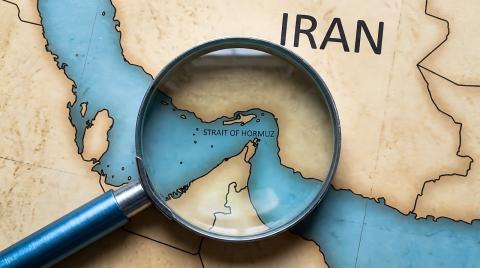
What if a single waterway could bring global oil supplies to a standstill? The Strait of Hormuz isn’t just a trade bottleneck—it’s a geopolitical flashpoint with the power to disrupt energy markets.
The World’s Most Dangerous Chokepoint
Imagine a shipping lane so narrow it could fit inside a football field, yet it carries 20% of the world’s oil and liquefied natural gas (LNG). That’s the Strait of Hormuz, a 55-kilometer stretch of water between Iran and Oman. Every day, tankers carrying 20 million barrels of oil and 9.3 billion cubic feet of LNG pass through this bottleneck, worth $600 billion annually.
But here’s the catch: this vital corridor is as fragile as it is crucial. A mere threat of closure in 2025 sent oil prices surging by six percent. Iran has made no secret of its ability to disrupt traffic, with one official declaring plans to “set ships on fire” if they enter certain areas.
The stakes couldn’t be higher. If the Strait were closed entirely, it would cut off 5 million barrels of oil daily—a blow that would ripple through global markets, from Beijing to Brussels. China alone relies on 45% of the oil passing through Hormuz, while Japan depends on nearly half its energy supply flowing through this narrow passage.
The Economic Domino Effect of a Closure
The Strait’s economic impact extends far beyond fuel prices. It’s not just about gasoline—it’s about every product that relies on petrochemicals, from plastics to fertilizers. If the flow stops, expect delays in everything from food production to aluminum manufacturing.
But this isn’t new territory. The 1980s Tanker War between Iran and Iraq showed how quickly the Strait could become a battleground. Today, the risks are even higher. Modern markets may be more diversified, but they’re still vulnerable to the kind of chaos that comes with a closure.
Iran’s Asymmetric Power and the U.S. Naval Gambit
Iran doesn’t need superior firepower to challenge global energy security—it just needs leverage. The country controls the northern shore of the Strait and has the tools to disrupt traffic without direct confrontation, using mines, drones, and proxies.
The U.S. response is predictable: its Fifth Fleet patrols the region, enforcing passage and escorting tankers. But even with all this military might, the economic risks remain clear. A closure would send shockwaves through global markets, pushing oil prices higher and testing the resilience of economies worldwide.
The Hidden Cost of Fossil Fuel Dependence
The Strait of Hormuz is a microcosm of our dependence on fossil fuels—a system so fragile it can be disrupted by a single waterway. While alternative pipelines exist, they’re only capable of diverting 5–10 million barrels a day—nowhere near the 20 million that pass through Hormuz daily.
The real lesson here isn’t just about oil—it’s about how our reliance on finite resources leaves us vulnerable to geopolitical chaos. Renewable energy could be the solution: solar, wind, and hydrogen aren’t subject to chokepoints or political threats.
The Road Ahead – Diversification and Resilience
Imagine a world where global energy isn’t hostage to a single 30-mile waterway. That future is possible through innovation and collaboration.
Renewables like solar and wind offer a pathway to energy independence. Countries are already proving it’s possible—Germany and China are leading the way, showing that clean energy can power entire nations without relying on the Strait of Hormuz.
Pipeline diversification is another step forward. Projects like Saudi Arabia’s East-West pipeline and the UAE’s Fujairah route demonstrate how overland routes can bypass the Strait entirely.
But no single country can tackle this alone. Global cooperation is essential—building shared infrastructure, investing in renewable technology, and creating alternative supply chains.
The U.S., for instance, already produces 22% of global oil. Why not double down on that while pushing for green energy? The solution lies in resilience—not just military presence but innovation.
Conclusion
The Strait of Hormuz is a lifeline for global energy—and a vulnerability. Its stability (or lack thereof) will shape the future of oil prices, geopolitical tensions, and our dependence on fossil fuels.
Imagine your daily life suddenly tied to the fate of this narrow waterway. The question isn’t whether it could happen—but how prepared we are when it does.
References
- What is the Strait of Hormuz, and why does its closure matter so...
- From the Strait of Hormuz to Australia’s Petrol Pumps: Why Gulf...
- Iran war: What is the Strait of Hormuz and why does it matter?
- The Strait of Hormuz Explained - YouTube
- Everyone is talking about how dangerous the Strait of Hormuz is, as if...
- Why the Strait of Hormuz Is More Than an Energy Crisis | Office of...
- Hormuz, Malacca, and the Intractability of Geoeconomics in...