The AI Boom’s Secret Weapon: Why Circular Investments Could Crash the Tech World (Or Save It)
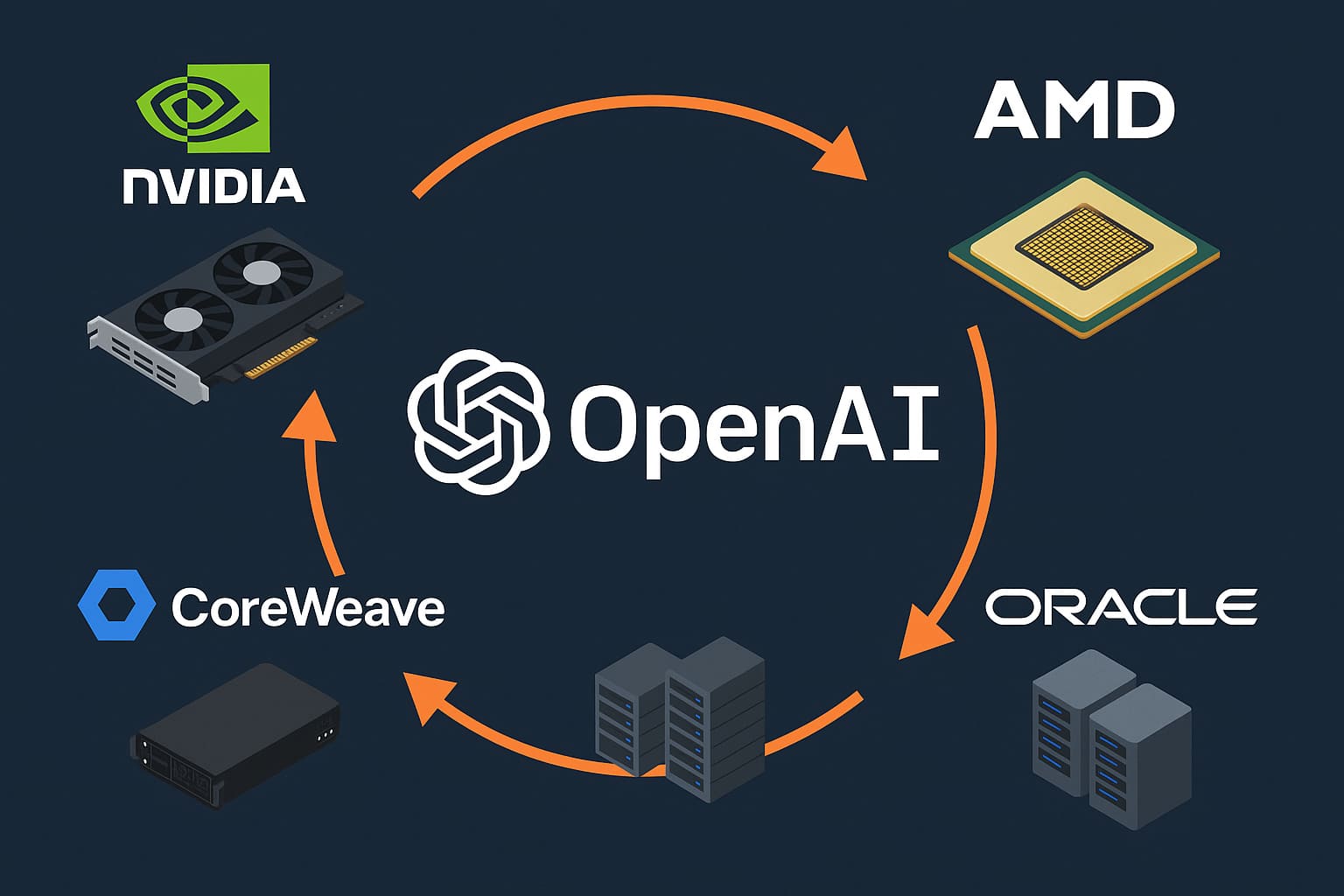
What if the AI boom is built on a house of cards? The circular investments fueling the AI revolution could be both a lifeline and a ticking time bomb. Here’s why.
The Circular AI Economy: A Double-Edged Sword
Imagine a world where every player in a game is also the referee, banker, and opponent—sounds like a bad LinkedIn post, right? That’s the circular AI economy in a nutshell. Companies like Nvidia, Microsoft, and OpenAI aren’t just collaborating; they’re investing in each other, creating a self-reinforcing loop where cash flows, chips, and cloud capacity spin like a never-ending TikTok dance. Nvidia throws $100 billion at OpenAI for data centers, which then use Nvidia’s GPUs. Microsoft backs OpenAI, which leans on Microsoft’s cloud. It’s a financial flywheel, but one that’s eerily reminiscent of the dot-com bubble’s “build it and they will come” mentality.
Here’s the catch: when one domino falls, the whole system wobbles. A supplier’s misstep—say, a chipmaker missing a deadline—could ripple through the ecosystem like a bad Uber ride during a snowstorm. The sources warn that circular investments, while fostering collaboration, also blur lines between buyer, supplier, and investor. It’s like if your neighbor lent you money to fix your roof, then you hired them to do the work. Suddenly, their income and your debt are tangled. If the roof leaks again, both of you are in trouble.
Historical parallels are hauntingly clear. The dot-com bubble inflated valuations with promises of the future, and circular financing—like Lucent’s vendor loans to internet startups—helped burst it. Today, Nvidia’s $250 billion bet on OpenAI or AMD’s billion-dollar stake in Anthropic feels like the same recipe: massive bets on interconnected players. The question isn’t if this will crash—it’s when.
But here’s the twist: this time, the stakes are higher. The AI boom isn’t just about flashy apps; it’s about infrastructure, data centers, and chips that power the next decade. Yet, as one analyst put it, “If AI revenues don’t grow, the whole house of cards could crumble.” The real question isn’t whether we’re in a bubble—it’s whether the AI economy can create real value before the next “reset” hits.
Stay tuned. The plot thickens.
How the AI Bubble is Built on Circular Deals
Imagine a game of musical chairs where everyone’s also the DJ, the player, and the manufacturer of the chairs. That’s the AI bubble—built on circular deals so tight, they’re more tangled than a TikTok dance challenge. Let’s break it down.
Nvidia, the chipmaker turning silicon into gold, isn’t just selling GPUs. It’s investing $100 billion in OpenAI, the startup behind ChatGPT, to fund a data-center project that will, ironically, be powered by… Nvidia’s own chips. Meanwhile, Nvidia’s $6.3 billion deal with CoreWeave—a cloud provider—looks like a love letter written in dollars. CoreWeave gets funding; Nvidia gets a guaranteed pipeline of chip sales. It’s a loop so smooth, it could make a rollercoaster blush.
But here’s the twist: OpenAI isn’t just a customer. It’s now a $300 billion cloud contract with Oracle, blurring lines between investor, tenant, and landlord. Oracle builds the data centers; OpenAI rents them; Oracle then buys more Nvidia chips to power them. It’s like a family reunion where everyone’s also your banker and your neighbor.
Now, zoom out. The S&P 500’s 46% of 2026 earnings growth? It’s all tied to AI infrastructure stocks. Nvidia, AMD, and the cloud giants aren’t just rising stars—they’re the entire constellation. If one stumbles, the whole sky could flicker.
The math is seductive: invest, buy chips, repeat. But what if the music stops? What if the AI boom turns out to be a dance without a floor? The next section? Let’s peek under the rug.
The Hidden Risks of Market Concentration

Imagine a game of Jenga where only five players hold the majority of the blocks. That’s today’s market: the top 10 S&P 500 companies now control 57.2% of the Russell 1000 Growth Index. It’s not just dominance—it’s a precarious tower. One misstep, and the whole system could wobble.
Enter circular AI investments, the new kid on the block. Picture this: Nvidia invests $100 billion in OpenAI, which then buys Nvidia’s chips to power its data centers. OpenAI, in turn, partners with Oracle to host its infrastructure—Oracle then buys more Nvidia hardware. It’s a loop, a financial Russian nesting doll. Sounds efficient? Maybe. But what if one link breaks? A chip shortage, a funding delay, or a sudden drop in AI demand could send shockwaves through the entire chain.
This isn’t just theory. Back in the dot-com era, companies like Lucent Technologies collapsed under the weight of their own circular financing bets—investing in startups that couldn’t deliver, leaving everyone holding the bag. Today’s AI ecosystem feels eerily similar. Microsoft pours billions into OpenAI; OpenAI buys Azure cloud services; AMD sells GPUs to Anthropic, which then invests in AMD. It’s a high-stakes dance where everyone’s both dancer and choreographer.
But here’s the catch: speculative growth without real monetization is a time bomb. The AI boom is fueled by promises—of self-driving cars, medical breakthroughs, and productivity miracles. Yet, many companies are still figuring out how to turn these promises into profits. If the party ends before the checks clear, we could see a repeat of 2000, with valuations cratering and investors left holding the virtual reality headset.
The question isn’t whether this system can fail—it’s when. And whether you’re ready to catch the pieces.
Lessons from History: Why the Dot-Com Bubble Matters Now
Back in the late ’90s, Lucent Technologies bet the farm on vendor financing—lending billions to dot-com startups in exchange for future purchases of its gear. It sounded like a win-win. But when the bubble burst, those loans turned into $250 billion in shareholder losses. Sound familiar?
Today’s AI ecosystem is playing a similar game, but with a twist. Nvidia isn’t just selling chips; it’s investing $100 billion in OpenAI, while OpenAI promises to buy billions in Nvidia GPUs. It’s a loop: money flows from investor to startup, then back to the original company through purchases. Like a game of musical chairs, except the music hasn’t stopped yet.
The danger? This time, the stakes are higher. The AI sector is already valued at $1.2 trillion, with giants like Microsoft, Oracle, and AMD all tangled in the same web. If monetization falters—if AI doesn’t deliver the promised productivity gains or revenue streams—the whole system could unravel. Imagine a domino effect: a slowdown at OpenAI, a drop in GPU demand, and suddenly, Nvidia’s stock takes a hit.
History has a way of repeating itself. The dot-com crash wasn’t just about overvalued stocks—it was about fragile business models propped up by circular financing. Could we be seeing the same thing now? The answer might lie in whether this time, the AI revolution actually creates value—or just inflates a new kind of bubble.
(Stay tuned for why the “This Time It’s Different” mantra might be the most dangerous phrase in finance.)
Circular Models in Action: Success Stories Beyond Tech
Imagine a world where waste isn’t an ending—but a beginning. Thailand’s biogas initiatives are proof of this. By transforming agricultural waste into renewable energy, the country isn’t just cutting emissions; it’s building a self-sustaining loop. Farmers feed organic scraps to biogas plants, which power homes and industries. The leftover sludge? It becomes fertilizer, closing the loop. It’s like a well-oiled machine where nothing goes to waste—except the carbon footprint.
Then there’s Brazil’s Connect the Dots program, a farmer’s lifeline in São Paulo. Picture this: local growers get training, equipment, and even a 30% premium on their crops. The catch? They must adopt regenerative practices that heal soil and boost yields. It’s not just about farming—it’s about weaving a network where every stakeholder benefits. Farmers thrive, ecosystems recover, and the economy gets a green jolt. It’s the real-world version of a game where everyone wins.
These stories aren’t just about sustainability—they’re blueprints for avoiding the traps of speculative hype. Unlike the AI investment frenzy, where companies bet on each other’s futures like a high-stakes poker game, Thailand and Brazil focus on tangible, circular value. No inflated valuations. No “winner-takes-all” gambles. Just steady, repeatable wins that benefit communities and the planet.
So, what if the future isn’t built on billion-dollar bets, but on systems that work? The next time you hear about circular AI investments, maybe ask: What if the real innovation isn’t in the chips, but in the loops we create?
The Crossroads: Innovation vs. Sustainability
Imagine standing at a crossroads: one path glows with the promise of rapid growth, the other whispers of long-term stability. The AI sector is here, teetering between the two. It’s like playing Jenga with a tower of blocks labeled “innovation,” each new investment adding height—but what if the base isn’t strong enough?
Circular AI investments are the new buzzword, a loop where companies invest in each other, creating a web of interdependence. Nvidia’s $100 billion bet on OpenAI, or Microsoft’s $1.2 trillion in AI bets, sounds bold. But here’s the catch: if one block (say, a key supplier) cracks, the whole tower could come down. This isn’t just hypothetical—it’s the same systemic risk that helped pop the dot-com bubble, where circular financing inflated fragile business models.
Yet, there’s a blueprint. In Thailand, biogas projects thrived through public-private partnerships, weaving together government policies, private investors, and research institutions. It’s a reminder that collaboration doesn’t have to mean chaos. The AI sector could learn to balance R&D partnerships with risk management, avoiding the trap of chasing hype over substance.
But will it? The stakes are moral and strategic. Are we building a future where AI’s benefits are shared, or repeating the mistakes of a generation ago? The answer might lie in choosing between a self-sustaining flywheel—or a fragile house of cards. What’s your bet?
Conclusion
The AI revolution hinges on whether circular investments become a foundation for resilience or a recipe for collapse.
Will you bet on the next bubble—or help build a system that lasts?
References
- IP Carrier: AI Circular Investment and Systemic Risk
- Dailyhunt - Personalized News in 14 Indian Languages | Latest Updates
- AI investments: circular economy vs tech bubble | LinkedIn
- Ep. 48 | A Week of Circularity: Investing in Collaboration Networks...
- When Markets Get This Concentrated, What You... | Advisorpedia
- AI ecosystem's 'circular' investment: risk or advantage?
- Are we in an AI bubble? | Data Driven VC